Attack of the Show!

EnviroReporter.com was featured on G4TV’s “Attack of the Show!” on April 16, 2012 where host Kevin Pereira and journalist Michael Collins discuss Fukushima meltdowns’ fallout and contamination of the Pacific Ocean and North America. This mainstream media coverage, seen by nearly 2 million AOTS! viewers, is historic in it being the first such program to boldly explore this subject.

L.A. Air Even Hotter with Radiation

Topping EnviroReporter.com‘s last radiation readings of HEPA filter dust in the western Los Angeles Basin, a 40-day accumulation of dust and debris by three HEPA filter machines at Radiation Station Santa Monica yields the highest air rad readings we’ve taken yet: 7.46 times normal. The California Highway Patrol considers anything 3 times normal radiologically to be a hazmat situation making this detection doubly dangerous.

Japanese Seaweed Radiation Doubles

EnviroReporter.com journeys back to the same Japanese store in Los Angeles to purchase the same brand and make of Nori seaweed it had bought last August. The green sheets of seaweed, prized for its nutty, crispy flavor by hipsters and locals alike, comes in at double background radiation, with a substantial part of that ionization coming from alpha radiation which is 60 to 1,000 times more dangerous than beta and gamma radiation because of its lethality if ingested or inhaled. The eight-month old Nori seaweed bought last year still radiates far above background but loses some of its punch strongly suggesting the presence of medium and long-lived radionuclides like cesium-137 and the lethal brew captured in uranium-60 “buckyballs.” Worse still is the fact that the gelling substances in seaweed, 90% of which is grown in the Far East, are used in toothpaste, milk shakes, beer, desserts and all manner of food and drink products that are made with alginate and carrageenan. Hot seaweed sold in 49 Japanese and Japanese-American stores in Southern California as well as over 900 stores.

L.A. Rain Radiation Over Five Times Normal

An imperfect storm swept into Southern California on, perhaps appropriately enough, April Fools weekend creating the conditions that tested EnviroReporter.com‘s scientific hypothesis that radioactive “buckyballs” and other fission radionuclides from the triple Fukushima Japan meltdowns are already impacting the region. Sure enough, a rain composed primarily of sea mist formed over a choppy ocean with high winds tested higher than any other Los Angeles Basin rain since Radiation Station Santa Monica began fallout radiation tests March 15, 2011, four days after the unabated meltdowns began. The rain, not impacted by so-called “natural” radon progeny, came in at a whopping 506% above normal, more than high enough to qualify as a hazardous material situation for the California Highway Patrol. This is the hottest L.A. rain detected with our Inspector Alert nuclear radiation monitor in the over 1,500 radiation tests we’ve taken since last year’s Ides of March.

Rocketdyne Still Hot

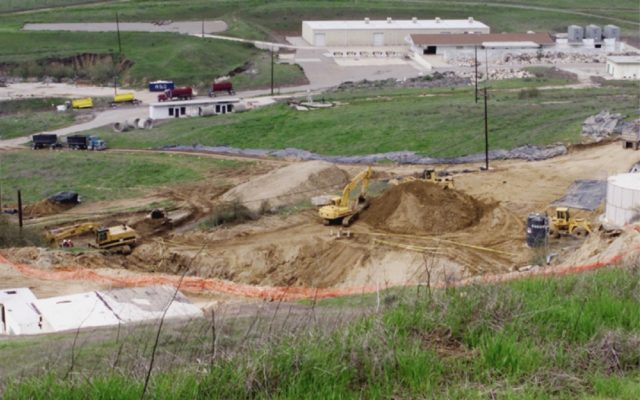
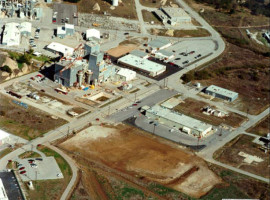
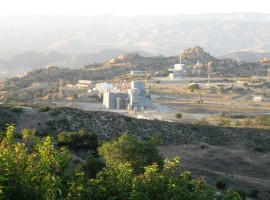
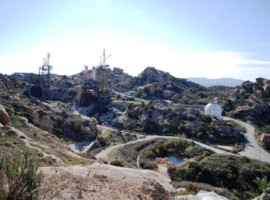
The U.S. EPA has spent millions on assessing the radiation and chemical contamination at the Santa Susana Field Laboratory, the old Rocketdyne site in the hills between Chatsworth and Simi Valley, California. In this Ventura County Reporter news feature, we find out that not only is Rocketdyne far more polluted than previously thought, even in places twice cleaned by lab owner Boeing and nuclear area responsible party, the Department of Energy, we learn that U.S. EPA has deliberately skewed the cleanup numbers. The result could be radionuclides like cesium-137, strontium-90 and plutonium-239/240 being left in place at high levels in violation of agreements between the State and DOE.

The Endless Bummer

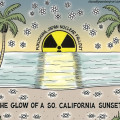
Sunny Southern California has been the bulls eye for Fukushima meltdowns fallout and radiation contamination with more Cesium-137 impacting L.A. more than anywhere else in the U.S. after the disaster began March 11, 2011. Now with levels of radiation hammering the West Coast with levels that dwarf Chernobyl’s 1986 meltdown, the danger of Uranium-filled “buckyballs” threatens to irradiate the West Coast turning the seashore a silent unseen cesspool of radioactive goo. This abridged and updated version of Beta Watch, with new data, information and interviews was so shocking that even EnviroReporter‘s favorite print editors were dumbstruck by The Endless Bummer. An EnviroReporter.com exclusive.

  • VA Nuclear Dump

  • Grave Mistakes

    Grave Mistakes

    Despite public outrage over soldiers’ tombstones disposed of in the VA’s biomedical nuclear and chemical [...]
  • Atomic Tombstones

    Atomic Tombstones

    Soldiers' tombstones are emerging from the muck of a biomedical nuclear and chemical dump on [...]
  • Broken tombstone of a World War I soldier discarded in a pile of waste excavated from Brentwood School athletic fields

    Dereliction of Duty

    A ghoulish graveyard of atomic tombstones, actually American military veterans' headstones, were dumped in Brentwood's [...]
  • More VA Nuclear Dump
  • Other Recent Articles

  • The Buckyball Stops Here

    The Buckyball Stops Here

    EnviroReporter.com finds that isotopic identifiers not only cost tens of thousands of dollars, they are thousands of times less sensitive than the Inspector Alert nuclear radiation monitors that we’ve been using since 2000. Now we don’t have to raise money to buy one and will offer to return a dozen donations made to us for that purpose.

  • Rad News Digest

    Rad News Digest

    Supplementing BakRad’s superb news feed on every EnviroReporter.com page comes Rad News Digest which goes back to Day 1 of the Fukushima triple meltdowns and keeps us current going into Year 2 of this unprecedented disaster.

  • Highest Radiation in L.A. Air Yet

    Highest Radiation in L.A. Air Yet

    Now 43 days later, we tested the same HEPA filters in the same environment and setup. This time, as you can see in the video, the dust was a lot hotter. A spot test was ~377% of the previous background. Then we vacuumed out the filters with a HEPA filter Eureka vacuum cleaner and tested the aggregate. The March 6 test of the combined dust came in at a sizzling 668% of background or 6.68 times normal. Since the last testing period, the radiation detected has risen another 130% indicating a continued upward trend.

  • What’s in Pepper Spray?

    What’s in Pepper Spray?

    An LA Weekly investigation finds the cancer-causing chemicals trichloroethylene (TCE) and tetrachloroethylene (PCE) being used as the base of pepper sprays sold in California with no Prop. 65 warnings. Sprays with these carcinogens are being sold all over the country. True Value and Do It Best hardware stores sell PCE-based pepper sprays at the Southern California stores LA Weekly investigated.

  • Beta Watch

    Beta Watch

    An 11-month EnviroReporter.com investigation with over 1,500 Fukushima fallout tests, a new UC Davis report about uranium-filled “buckeyballs” and proof that sea mist carries radiation inland for hundreds of miles all add up to one thing: it’s going to be a long hot Endless Bummer at the beach this year. Bay Watch has just turned into Beta Watch.

  • A Whole HEPA Trouble #2

    A Whole HEPA Trouble #2

    Proof positive of the need for HEPA filter machines to clean out air impacted by Fukushima multiple meltdowns fallout. The aggregate measurement of the dust and debris of both the Honeywell and Kenmore Plasmawave HEPA filter air cleaners was shocking – 5.38 times normal. As we discuss in the upcoming post “Beta Watch,” these measurements, and indeed most all the measurements at Radiation Station – Santa Monica, are not impacted by so-called “natural” radon progeny being pulled out of the air by these breath-saving machines which suggests that there is an entirely new method of radioactive fallout from Fukushima impacting coastal zones of the United States and Canada, if not eventually all 44 nations on the Pacific Rim.

  • A Whole HEPA Trouble #1

    A Whole HEPA Trouble #1

    After 42 days of air filtering at Radiation Station – Santa Monica, we did our periodic cleaning and testing of our Honeywell and Kenmore Plasmawave HEPA filter air cleaners. Taking into account that there was no hot rain and no radon progeny in that rain, this spot check was pretty high. According to a Nevada accident report obtained by EnviroReporter.com, a hazardous material incident’s tripwire is three times background for any subject media, or 300% of normal. This clearly exceeds that. The aggregate testing for the combined dust of the machines was even higher at 538% of normal.

  • Will SOPA Nuke the Internet?*

    Will SOPA Nuke the Internet?*

    Don’t count on being able to access uncensored information about Fukushima, or anything else, if SOPA (the Stop Online Piracy Act) or its Senate version PIPA (the Protect IP Act) becomes law. A crucial vote on SOPA is January 24 in Washington D.C. which will possibly change the Internet forever.

  • Seasons Readings

    Seasons Readings

    Home for the holidays in Michigan meant radiation readings in jets up to eight times normal and a jet stream-driven storm that was imbued with Fukushima meltdowns fallout coming in at a sizzling 650% of background. Fukushima fallout in the American Heartland also served up other radiological surprises, some of which were unexpectedly positive.

  • HOTTER Michigan Rain 12-30-11 Pt 2

    HOTTER Michigan Rain 12-30-11 Pt 2

    Our second rain sampling on the second to last day of 2011 yielded the highest radiation readings EnviroReporter.com has ever taken in precipitation since the triple meltdowns and melt-throughs began at the Fukushima Daiichi nuclear complex in Japan. This level of radiation in the rain was not natural or the result of radon progeny. This is the grim future of fallout over the Heartland of America.

  • HOT Michigan Rain 12/30/11 Pt 1

    HOT Michigan Rain 12/30/11 Pt 1

    EnviroReporter.com heads home for the holidays and encounters its first jet stream-driven storm in the American Heartland of Southwest Michigan where the first storm sample comes in a whopping 561% of the previous background radiation test.

  • Hazmat-level So Cal Rain – December 17, 2011

    Hazmat-level So Cal Rain – December 17, 2011

    Los Angeles rain comes in at a sizzling 415% of normal, far higher than what triggers a radiation hazmat incident for the California Highway Patrol.

  • Radon Progeny Risk? December 15, 2011

    Radon Progeny Risk? December 15, 2011

    Santa Monica rain radiation reads at approximately 264% normal higher. But is this sample, which decayed down to background within two days, reading hot because of so-called “radon progeny”? What is radon progeny and is it coming from Fukushima or locally. Being by the ocean on the west end of the Los Angeles Basin, and on the receiving end of predominant sea breezes, it seems likely that radon progeny plays less of a role in Radiation Station Central’s radiation readings than it would further inland.

  • Radioactive Downtown L.A. Air 11-30-11

    Radioactive Downtown L.A. Air 11-30-11

    The day the two-month old Occupy Los Angeles camp is evicted from City Hall, EnviroReporter.com tests three months worth of HEPA filter-cleaned air in an historic downtown Los Angeles building with central air. Much to our surprise, the HEPA filter dust tests 364% of normal, hotter than expected.

  • Radioactive Los Angeles Air 11-16-11

    Radioactive Los Angeles Air 11-16-11

    Disturbing readings from one of Radiation Station Central’s HEPA filters after just 30 days of use: 308% of normal background higher. Alpha and beta radiation captured by the filter can be attributed to the triple Fukushima Japan meltdowns, melt-throughs and melt-outs and the decision to begin burning 550,000 tons of radioactive debris in Tokyo from October to March, sending a double dose of radioactive fallout on the Jet Stream over the Pacific to land on America, Canada and beyond. Finding this high a level of radiation is considered dangerous by the United States Environmental Protection Agency. Ingested alpha particles can be up to 1,000 times more dangerous than their beta and gamma counterparts.

  • Radioactive Los Angeles Rain 11-6-11 evening

    Radioactive Los Angeles Rain 11-6-11 evening

    Los Angeles’ first impacted storm detected by Radiation Station Central in Santa Monica was a troubling sign of what was to come later in the evening: fallout from the triple meltdowns at Fukushima Japan and, even more unbelievably, radioactive contamination from the 550,000 tons of radioactive debris incinerated in Tokyo beginning in October 2011.

  • Radioactive Los Angeles Rain 11-6-11 morning

    Radioactive Los Angeles Rain 11-6-11 morning

    Los Angeles’ lucky streak has come to an end: the Fukushima Express has delivered a radioactive punch in rain thanks to the Jet Stream over the Pacific which is moving south as the weather cools. Hot rain over the cold land.

  • 2 HEPA Filters Aggregate – October 3, 2011

    2 HEPA Filters Aggregate – October 3, 2011

    After just 53 days of air cleaning at Radiation Station in Santa Monica, California, two HEPA filters’ dust aggregate comes in at a worrisome 216.0% of background higher than normal. Even in drier climes like Southern California, which hasn’t been hit (yet) by jet stream-carried storms suffused with radioactive fallout from the triple Fukushima Daiichi meltdowns in Japan, there is measurable radiation in dust particulates breathed by millions in the Greater Los Angeles area.

  • All Recent Articles
Improve life with a top water filter system