Watchdog agency under fire for colluding with space firm
By Michael Collins
LA Weekly – May 5, 1999
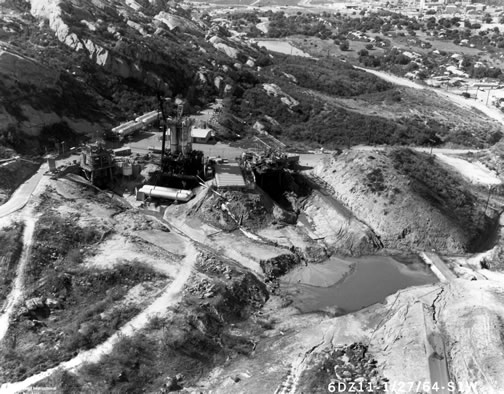 The controversy over potential toxic contamination of workers and the community surrounding Rocketdyne’s Santa Susana Field Laboratory in Simi Valley is now threatening to engulf a state agency charged with monitoring inquiries into the aerospace giant.
Assembly Members Sheila Kuehl (D– Santa Monica) and Scott Wildman (D-Glendale) have each called for investigations into the conduct of the state Department of Health Services, and on Monday, Governor Gray Davis weighed in. “I will do all I can to restore public faith in the state’s efforts to assist the community in addressing these concerns,” Davis said.
The high-level attention was sparked by recent revelations that DHS staff suppressed findings of elevated levels of lung cancer in Simi and San Fernando Valley communities surrounding the Rocketdyne facility. The charge was compounded by separate instances of state staff working with company officials to soften the impact of critical reviews. In addition, critics say the DHS conspired to gut a public oversight panel supervising a Rocketdyne worker-health study. The oversight panel was formed in 1989 after the DHS was accused of suppressing yet another cancer study damaging to Rocketdyne; a decade later, lawmakers are responding to similar charges.
On April 13, Assemblywoman Kuehl ignited the latest fury. “The purpose of the independent panel was to restore the public trust that DHS had completely destroyed by suppressing the cancer study and appearing to collude with Rocketdyne,” an angry Kuehl wrote to Grantland Johnson, head of the state Health and Human Services Agency, which oversees DHS.
“To my utter disbelief, it was disclosed to me today that DHS has suppressed another cancer study,” Kuehl wrote. “DHS’s conduct is unconscionable, and it demands immediate action.”
Johnson responded two weeks later. “We have taken the issues raised in your letter regarding the suppression of reports and information by DHS staff very seriously,” he wrote to Kuehl. “We have contacted Winston Hickox, secretary of the California Environmental Protection Agency, and requested his assistance.” Johnson and Hickox agreed to assign Edward Lowery, director of the state Department of Toxic Substances Control (DTSC), to head up the review. A report is expected within 90 days.
On May 3, Governor Davis stepped up, directing Hickox’s initiative and transferring $150,000 in funds to CalEPA. “By transferring these funds I am effectively removing oversight of this effort from the DHS and giving it to CalEPA,” Davis wrote in a letter to Kuehl. “I share your concerns regarding the potential health impact on nearby communities resulting from site contamination at the facility,” Davis wrote.
Kuehl said last week she was delighted by Davis’ response: “After years of neglect and stonewalling by the former Governor’s Office, I very much appreciate that we finally have a governor who is committed to restoring public trust in the agencies that have responsibility for protecting our health and safety.”
The alleged collusion between Rocketdyne and DHS could lead to other charges against the agency as well. Assemblyman Scott Wildman, chairman of the state’s Joint Legislative Audit Committee, last week announced a broad inquiry to examine the agency. “[A] number of issues . . . have come together,” he said, “[in] some of the things [the Weekly] has done about Rocketdyne. But also this perceived pattern of, basically, suppressing things from the Legislature that have been occurring . . . in the DHS for a number of years.”
Specifically, Wildman said the DHS had blocked outreach programs for L.A. Medi-Cal recipients, had failed to identify and track children with lead poisoning, and had suppressed one of two studies of the state’s smoking ban.
“Over the past year, the investigations that the committee has initiated have found some serious difficulties within DHS in terms of a pattern of withholding information from the Legislature. We suspect that this is a real problem,” Wildman said in an interview. “What we are looking at now is a history that goes back five or six years, of a department that has kind of done its own thing and, in essence, hasn’t really respected the intent of the Legislature.”
The state agency’s most notorious entanglement, however, may stem from its effort to assess the health problems associated with Rocketdyne’s massive Santa Susana Field Laboratory (SSFL), in the hills between the Simi and San Fernando valleys. Workers there toiled on the frontlines of the Cold War, testing experimental nuclear reactors and developing rocket engines for the space race, along with MX missiles designed to carry nukes. A litany of SSFL accidents, including a partial meltdown of a reactor core in 1959 and widespread radioactive and chemical contamination, prompted an investigation of the health of Rocketdyne workers and of mortality rates in the residential communities nearby.
The DHS’s apparent pattern of data quashing and collusion with Rocketdyne stretches back to 1990, when it suppressed its own findings of elevated bladder-cancer rates in west San Fernando Valley tracts near SSFL. In 1996, over the objections of the oversight panel, the DHS leaked the preliminary draft of a UCLA radiation study to Rocketdyne, allowing the corporation to press for changes in it. And last year, the agency advanced a preliminary draft of a UCLA study of chemical exposure to the company, again over the panel’s protests. State officials intensified their scrutiny after last month’s disclosure, that DHS had failed to make public a report showing a 17.2 percent spike in lung cancers in the 19 Simi Valley census tracts nearest the lab.
Before the grim radiation-study findings were released in late 1997, showing that exposure to radiation at SSFL created health risks at ionizing levels much lower than previously believed, the DHS and Rocketdyne worked together to limit publicity damage. A paper trail of DHS-Rocketdyne collusion apparently began in March 1997. The DHS’s Peggy Reynolds sent an e-mail to Richard Kreutzer, chief of the environmental-health investigations branch, concerned that DHS officials needed to meet with Rocketdyne honchos to plan a strategy to deal with the devastating results of the UCLA radiation study before it was released. Reynolds said that she had talked to both Rocketdyne consultant Susan Santos and Phil Rutherford, manager of Rocketdyne’s environmental-remediation program, to huddle over “what may be feasible and appropriate” in terms of a community-health study.
Two days later, a DHS administrator promptly responded. “As the worker-health studies near release, Rocketdyne management has been worried that they face growing litigation from community residents regarding cancer and radiation exposure from SSFL,” wrote Robert Harrison, chief of the DHS occupational-health surveillance and evaluation program, in an e-mail to Kreutzer. Harrison pondered whether the DHS should do its own study but sagely added that the “community doesn’t trust DHS.”
They shouldn’t, according to Dan Hirsch, co-chairman of the oversight committee and founder of the anti-nuclear group Committee To Bridge the Gap. He contends that the DHS and Rocketdyne made a backroom deal: Kill off the current citizens panel, eliminate the chance of a community study, and wrest back control of the health investigation into the hands of the DHS.
Nor was Hirsch comfortable with Governor Davis’ decision to replace the DHS with the state EPA. In particular, CalEPA’s Hickox said he plans to place the whole affair under the jurisdiction of his Department of Toxic Substances Control (DTSC), which Hirsch refers to as a “captured” agency. “The DTSC, in my estimation, is at least as in need of being investigated as the DHS,” Hirsch said. “[The] DTSC has also been heavily influenced by Rocketdyne to prevent it from doing its job.”
Hirsch points to the 1994 deaths of two Rocketdyne workers (see sidebar) as proof. The SSFL workers were killed incinerating explosive rocket propellant, a procedure conducted in a manner that apparently violated DTSC guidelines. Hirsch claims that lax DTSC enforcement helped bring about the disaster. “They have been asleep at the switch for years,” he said. “The DTSC has been captured, and it’s ludicrous to even think that they could investigate DHS for collusion with the company.”
Others aren’t so chary of the DTSC. “Yes, there are problems at DTSC,” said Kuehl staffer Syrus Devers. “However, they have a new director there who is a pretty good guy, Ed Lowery,” he said.
Still, Devers said, “Lowery is going to have to put in the hours, and it’s not going to be easy. The ‘we-be’s’ are all over — ‘We be here before you, we be here after you’re gone, and we be the ones who run the agency.’ If you are going to turn an agency around, you’re going to have to fight the we-be’s.”
Devers is also receptive to the Joint Legislative Audit Committee investigation. “Assemblyman Wildman has the ability to subpoena documents, haul state-agency employees before the committee to give testimony, send his staff out to look at records,” Devers stated. “Ed Lowery is a good guy, but it’s a big job [and] if it turns out that he is not up to the task, it might be nice to have another investigation going that’s a little farther away from Rocketdyne in Sacramento. [If] it’s a little more under legislative control, [it] might be a little more aggressive.”
In addition to the DTSC, Davis also suggested that CalEPA place the Rocketdyne reviews under its Office of Environmental Health Hazard Assessment. Here too, however, activists are skeptical about the state’s ability to adequately investigate supposed malfeasance between the DHS and Rocketdyne. “OEHHA has been a nightmare, at least under [former Governor Pete] Wilson’s administration,” according to Joe Lyou, an activist with the Committee To Bridge the Gap. “They have been accused of biasing their test results, delaying the releases of their studies to accommodate corporate interests and destroying records that go against their biases.”
Whatever state agency steps into the breach left by the DHS, it won’t have much trouble getting up to speed. A federal class-action suit seeking damages against Rocketdyne for health effects and declining property values has recently been certified by the 9th Circuit Court of Appeals in the name of 500,000 potential claimants. Other residents are making complaints and appeals public on the Internet.
“I’m mad as hell,” said one recent posting. “I moved to Simi in September 1998. Myself and members of my family were getting beet-red faces. Then, after being here three months, I started itching all over. I am young and never had any of these problems before moving here. There is something terribly wrong with what is going on.”
25 Years of Award-Winning SSFL/Rocketdyne Reporting
1998 – 2023










Recent Comments