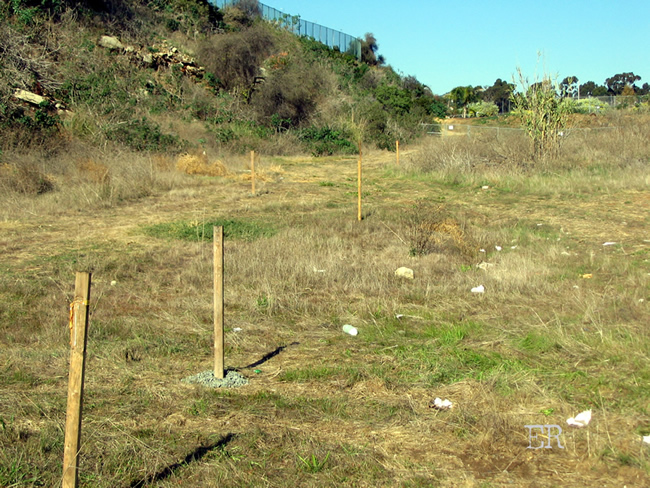
 Last month’s LA Weekly news article “Brentwood’s Toxic Grave” angered veterans and civilians alike. Soldiers’ tombstones disposed of in the West LA VA’s biomedical nuclear and chemical dump were inexplicably ignored by workers as the VA commenced a controversial second round of toxics testing.
“Obviously, this is a matter of concern for The American Legion,” said Ian de Planque, assistant director of cemetery affairs. “The mistreatment of the tombstones, even if they are meant for disposal is very disturbing.”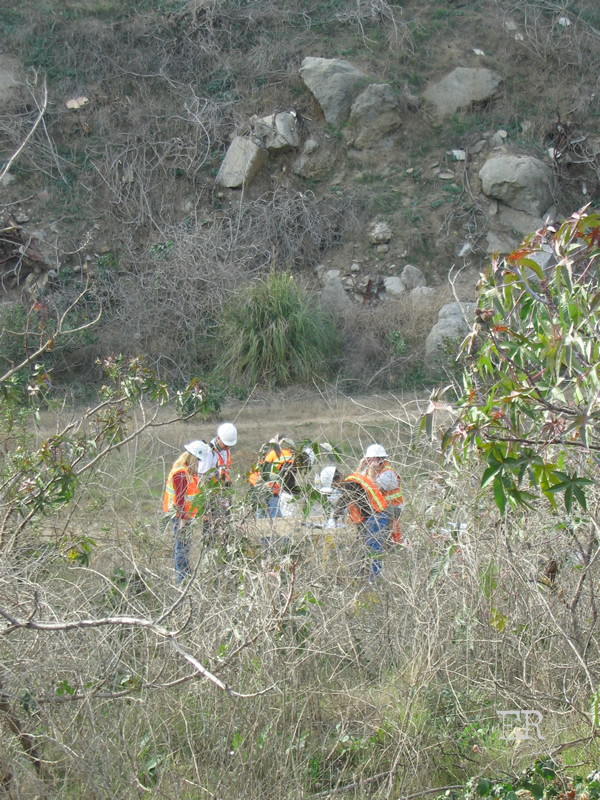
Disturbing enough that within days of the article’s publishing in the paper, the tombstones were gone, or at least the most visible of them. But that didn’t bury the anger caused by the ghoulish graveyard of gravestones surfacing in the dump which operated from 1948 to 1968, the result of radiation tests on animals and humans at UCLA and the VA.
The VA’s fast action unearthing the visible grave markers is in stark contrast to the two years it took to initiate the $1 million Phase II testing that began in late November as reported on in the Weekly. The work follows Phase I testing in December 2006 after the nuclear dump was first exposed by EnviroReporter.com the preceding May.
EnviroReporter.com‘s Phase I analysis found numerous flaws in the testing including the avoidance of testing known dump areas as has happened again in Phase II. Yet even with Phase I’s limitations, the Phase II testing appears to have ignored radiation-marking red flags from Phase I testing, instead sampling soil far from where the known dump maps indicate haphazardly buried radioactive animal carcasses and barrels of chemicals.
Now with some, but probably not all, of the veterans’ tombstones removed from the dump, and a refusal to answer a comprehensive list of LA Weekly and EnviroReporter.com questions for the VA, doubts remain whether the department will ever fully investigate, excavate and remediate the dump.
Since the Weekly article appeared, local leaders, like Representative Henry Waxman (D-Los Angeles) and Los Angeles Councilman Bill Rosendahl, have expressed concern about the Phase II testing. Waxman’s office, which was aware of the Phase II assessment since September, requested a copy of our questions for the VA which we sent December 16.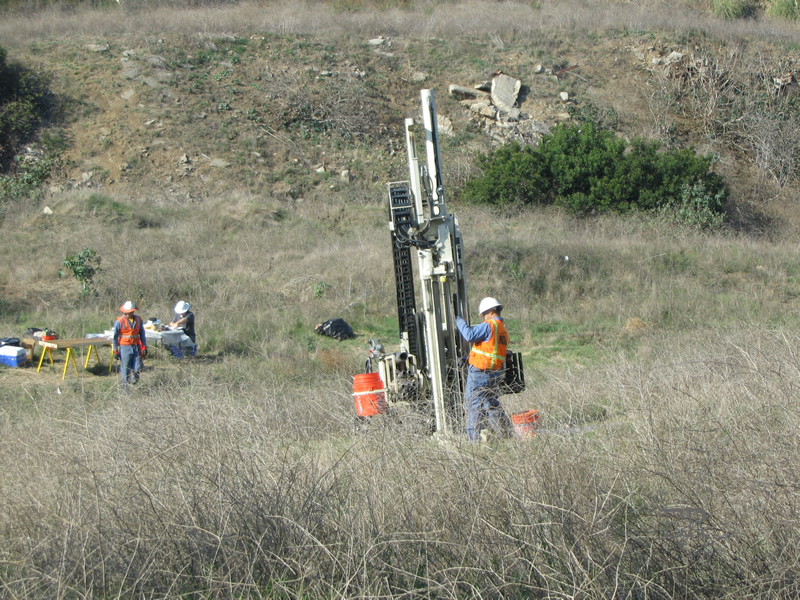
No public notice was given about the testing or how it was to be conducted either by the VA or Waxman’s office. But photographs obtained by EnviroReporter.com confirm what extensive on-scene observation suggested; the VA’s Phase II contractors are coring for soil samples for laboratory analysis in the wrong places.
The secretive analyses, which ignore the recommendations and previous Phase I testing in 2006, will leave the known areas of the nuclear dump untested and untouched. This includes areas underneath Barrington Recreational Center and its off-leash dog park. Phase II testing also ignored the western arroyo that borders upscale condominiums along Barrington Avenue and the lower soccer field of Brentwood School.
“The average readings for the East Arroyo, West Arroyo and the Brentwood School lower soccer fields were notably above” control areas with natural levels of radiation, according to the Phase I report which recommended further investigation, citing “strong concern by members of the community,” historical documentation of dumping, and radiation detected by the Phase I contractor.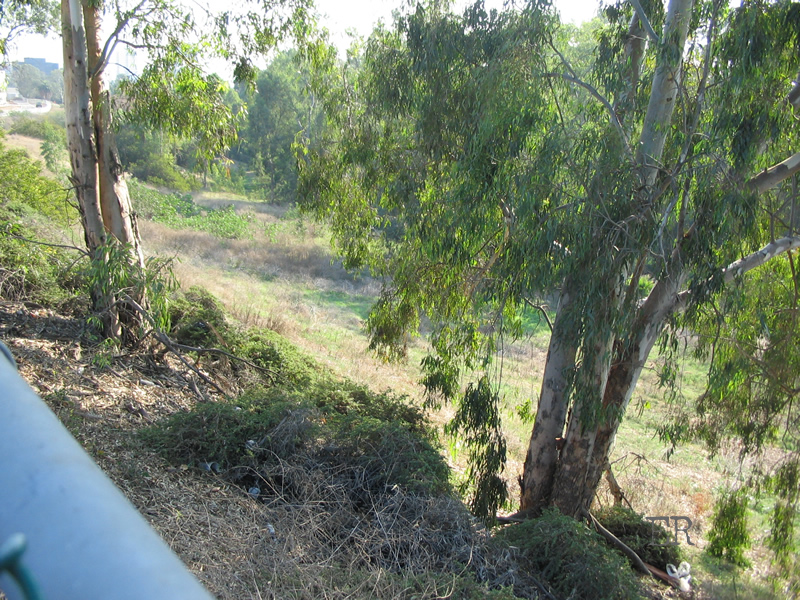
The VA’s response to the LA Weekly & EnviroReporter.com investigation indicates a different and unexplained reading of the regulations regarding soldiers’ tombstones. The West LA VA director Donna Beiter’s statement came after Erik J. Gutierrez, a “Stakeholder Relations Representative” from the West LA VA’s Office of External Affairs, refused our list of questions submitted after he left a voicemail message indicating he would “love to answer” our questions.
Our queries for the VA included questions about testing protocols, known dumping areas being ignored, why were Phase I’s recommendations to test both arroyos and Brentwood School being ignored and why wasn’t the public informed of the testing.
“I received your questions and I am sorry to inform you that I cannot provide an answer for each one,” Gutierrez responded. “As you are no doubt aware we are a large healthcare organization and we deal with a myriad of issues on a daily basis. Please re-submit your questions of most importance and I will do my best to provide you with our responses.”
We subsequently submitted two questions. “Regarding the tombstones: What happened to them and does VA have a statement regarding their existence and removal? Regarding the Phase II testing: Can VA share where the Phase Two testing is taking place and the actual testing plans including the scientific protocols that we assume would guide those plans?”
Gutierrez then sent us a statement from VA director Donna Beiter explaining that the headstones were buried in the 1970s along with debris from an old building. “During our investigation, we found that these grave markers were removed, and disposed of (including the breaking up of the stones) according to VA regulation and came from replacements discarded from the VA cemetery during the same time period.”
However, VA regulations read “Marble and granite headstones or markers that are permanently removed from a grave must be destroyed, ensuring that the inscription is no longer legible.” As Atomic Tombstone galleries on EnviroReporter.com show, the tombstones are legible and many are intact.
Two follow-up questions for Beiter were never answered: “Some of these grave markers were intact and legible. This does not seem to conform to VA regulations as stated above. Could Ms. Beiter explain what she meant by her statement that the ‘grave markers were removed, and disposed of… according to VA regulation’? Did the regulations change since the 1970s and, if so, how?”
Veterans are particularly sensitive about how the remains and graves of their comrades are treated.
“There is a long history of both disregard and disrespect for the honorable men and women who sacrifice for their fellow Citizens dating back to the Bonus Army protest in 1932 to the initial lack of recognition for the Vietnam Veterans in the late 60s and early 70s to the recent exposé of inhumane conditions at Walter Reed Army Medical Center” commented Charlie Baker on the LA Weekly article.
“The disrespect shown in this article for the grave markers and the lack of concern just continues the tradition of disrespect for the best and bravest of our society,” Baker continued. “I do appreciate the reporter(s) that shined a light on this subject. The freedom of the press is one of the rights that Veterans fight for and now that right has been used to expose an injustice.”
Not surprisingly, the VA opted not to excavate the area where the tombstones were laying exposed even though a 1971 VA report’s photograph of the dumping suggests there may be many more grave markers under the dirt that will eventually come to the surface.
Beiter’s statement said that the VA is “currently conducting a surface and subsurface Environmental study of the ‘arroyo’ area located to the east of the Barrington Park Recreation center to put to rest any concerns that our property is unsafe.”
This predetermined conclusion, already criticized in the Weekly article, ignores that the concerns over the property’s safety have to do with what’s under the Barrington Recreational Center and Brentwood School’s athletic fields, not in the eastern arroyo where the VA’s own reports says is filled with thousands of truckloads of inert dirt.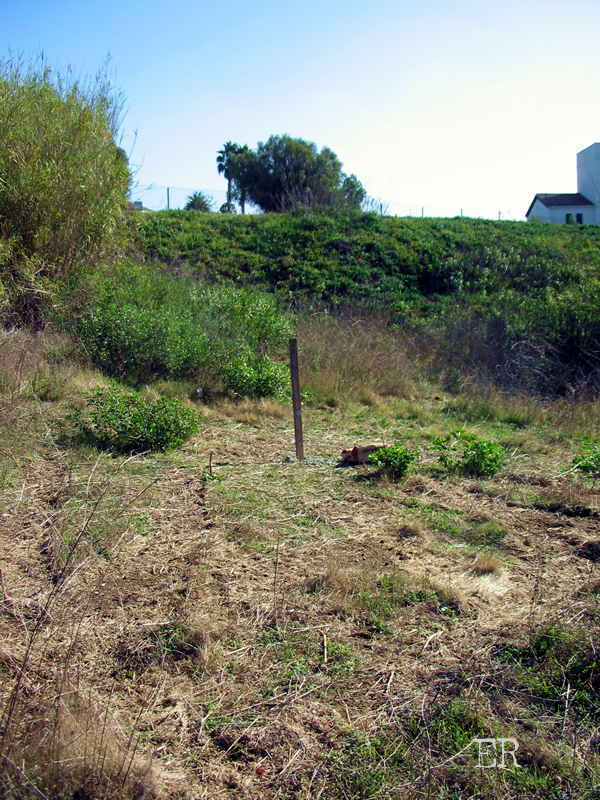
“How is the public supposed to rely on the conclusions of the Phase Two study when the VA appears to have prejudged the outcome?” said Dr. Bennett Ramberg in the article. “We’re in the more definitive phase and yet, once again, the questionable zones at the site appear to be ignored by the testers. If you’re going to spend $1 million in these tight times, you have got to get it right.”
Over the six days that LA Weekly observed this $1 million Phase II subsurface testing, the VA contractors managed to core for dirt in areas either filled with inert dirt or hundreds of yards away from the dump’s known areas.
By confining the testing to the arroyo, Brentwood School’s lower soccer field, which tested high in radiation in Phase I, won’t be tested nor will the heart of the dump that runs underneath part of Barrington Dog Park.
Since this investigation began in 2001 and broke five years later, the VA has excavated no more than the atomic tombstones from the dump. Even with EnviroReporter.com‘s extensive analysis based on the department’s own documents, maps and eyewitness testimony, VA honcho Ralph Tillman continues to insist that ‘there is no there there’ despite mounds of evidence to the contrary.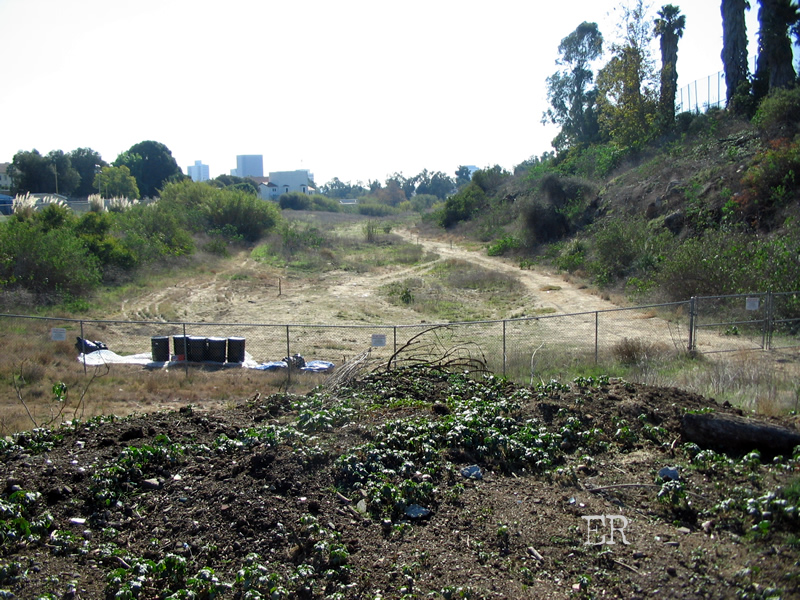
“Why doesn’t the VA dig up that mound of crap they excavated from Brentwood School where it’s sitting in plain sight like the article says?” commented a self-described Vietnam veteran on LA Weekly. “Because they don’t want to get sued by the school, that’s why. The VA went and leased contaminated land to Brentwood School which gladly took it, ignoring all the environmental reports that Collins has analyzed on Enviroreporter.com, and then acts like they tested the toxins away after Collins first breaks the story. I don’t think [that] passes the stink test.”







I Stayed at the wla Veterans hopital for over a year in 1998-9 and one of my favorite shortcuts thru the grounds was past an old shop building it was littered with 1″x2″1/4 lead containers with radiation warning labels affixed the were most likely buried there in the 50’s
I don’t understand why the gravestones were disposed of in the first place.